Search This Blog

Showing posts with label Liberalism. Show all posts

Friday, 27 December 2013

Happy...holidays?: Postmodernism and Secularisation during the Holiday Season


Venture onto any bleeding-heart liberal forum, particularly on the internet, and you'll be assaulted with cheery holiday greetings. Ranging from a simple and inclusive "Happy Holidays!" to "Happy Wednesday (if you don't celebrate Christmas)!", it raises the question as to what exactly is the appropriate greeting for one to use in a society where very few people actually celebrate Christmas for what it is - as opposed to using it as an excuse to exchange gifts, get trashed, eat far too much and argue freely with family members (don't forget to cut Auntie June off after sherry number 3, or be treated to  long-winded rants as to why the local gypsies are menaces to society).

The question of holiday greetings does seem to be one that is very subjective, in that I personally would not be offended if someone wished me a Merry Kwanzaa today or a Happy Hanukkah at the beginning of the month. In the end, they are all expressions of well-wishes and happiness. However, I can understand coming down on the other side of this. The society I live in preaches tolerance and open-mindedness to a relatively large degree. I choose to accept the well-wishes and do not linger over the precise sentiment. But if one were not raised in such a pick'n'mix society, then one may feel differently about this. I can understand the frustration that would arise from being constantly subjected to the traditions of a culture that was unlike my own, and may have, in the past, even oppressed mine.

This is where the all-inclusive holiday greetings seem to arise from. An effort to discard the "shove it in your face" element of Christmas in so many Western countries. While this does seem fair, it does also raise the question of free will, freedom of expression and on the flip-side, of whether or not an inclusive greeting is quite enough.

Being a liberal myself, I am always keen to defend the freedom of expression and the freedom to do as you wish within the constraints of the harm principle. However, I do recognise the problems that arise from such a principle. For example, although the oppression experienced by women, particularly in England today, is of a very intangible quality, it causes harm in ways which cannot be quantified. Situations such as this highlight the slightly finicky nature of the principle. In the context of tolerance and secularisation, it begs the question of how free people should be allowed to be with their religious behaviour. It has been suggested that religion has become more privatised in recent years - that people are far more inclined to keep their religion to their private rather than in the public forum. However, does this mean that it should only be private? Here arises a battle between tolerance and freedom.
To what extent should we tolerate peoples' religious expression and how much harm must come to an individual or a collective before we are justified in removing freedoms?

In a society so ideologically divided, our options seem limited. Shall we continue to adhere to our state's religion, enjoying the public holidays dictated by Christianity? Or shall we attempt to create a more cohesive society that allows people to take the religious holidays they deem necessary to themselves and not only to the majority? And in this case, should atheists be awarded days off to observe their faith in a lack of God?

Inclusive greetings seems appropriate at the given time, but they do raise questions as to how we structure our society. As a person raised Catholic, but who now practices no faith, I wonder at the extent to which our society is Christian-centric. It is the product hundreds of years of law and tradition, but in such a multicultural society, with religion either becoming more privatised, disappearing or at least differentiating to allow for multiculturalism, then should we not begin to change things more radically?

Photo attributed to AForestFrolic

Thursday, 3 October 2013

Key Thinkers in Modern Liberalism

John Rawls:

  • American academic and political philosopher.
  • A Theory of Justice (1970) is often regarded as the greatest political philosophy written since WWII. Influenced modern liberal and social democratic thought.
Used a form of social contract theory to reconcile individualism with social justice and economic redistribution. "Justice as fairness" is based on the belief that behind the "veil of ignorance" (not knowing your social position and circumstance) most people would favour two basic principles: (1) the liberty of each person should be compatible with a like liberty of all, and (2) that social inequality should only exist if it works to the benefit of the poorest of society. Universalist ideas changed over time.

Writings: A Theory of Justice (1970) and Political Liberalism (1993)


Key Thinkers in Classical Liberalism

John Locke (1632-1704):


  • English philosopher and politician.
  • Views developed against the background of the Glorious Revolution (1688).
Consistent opponent of absolutism and seen as one of the most influential philosophers of the Glorious Revolution, which established a constitutional monarchy. A key thinker in the earliest forms of liberalism. Accepted that human beings are equal and free by nature, but prioritised property rights which prevented him from endorsing political equality or "modern" democracy.

Writings: A Letter Concerning Toleration (1689) and Two Treatises of Government (1690).


Adam Smith (1723-90):


  • Scottish economist and philosopher.
  • Seen as the founder of the 'dismal silence'. 
Smith developed a theory of motivations that attempted to reconcile human self-interestedness and unregulated social order. Created the first systematic attempt to explain the workings of the economy in market terms and emphasizing the importance of division of labour. A free-market theorist, aware of the limitations of a laissez-faire system.

Writings: The Theory of Moral Sentiments (1759) and The Wealth of Nations (1776).


Thomas Jefferson (1743-1826):


  • American statesman and political philosopher.
  • First Secretary of State (1789-94) and third POTUS (1801-9).
  • Principle author of the Declaration of Independence.
Developed a democratic form of agrarianism - a blend of rule by natural aristocracy, limited government and a laissez-faire market. Expressed sympathy for social reform; favoured the extension of public education, the abolition of slavery and greater economic equality. "Jeffersonianism" has come to mean resistance to strong government and a stress on individual rights and responsibilities.


Jeremy Bentham (1748-1832):


  • English philosopher, legal reformer and founder of Utilitarianism.
  • Ideas formed the basis of philosophical radicalism which was responsible for many of the social and legal reforms in Victorian Britain.
Developed an allegedly scientific alternative to natural rights theory. A moral system based on the concept that human beings are rational and self-interested creatures ("utility maximisers"). Created the 'principle of general utility' - "the greatest happiness for the greatest number" - which justified laissez-faire economics, constitutional reform and political democracy.

Writings: Fragments on Government (1776) and Principles of Morals and Legislation (1789).


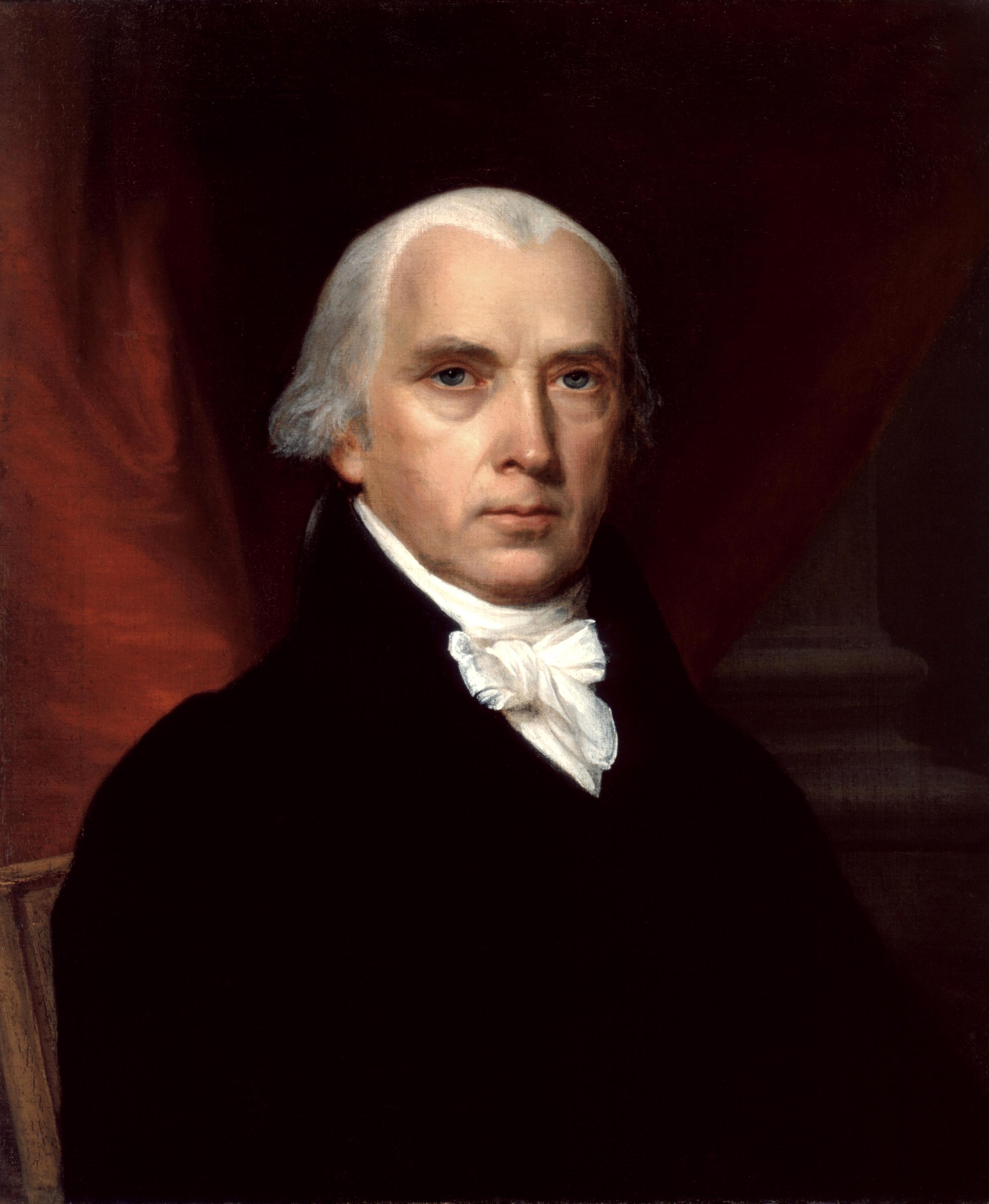
James Madison (1751-1836):


  • American statesman and political theorist.
  • Advocate of American nationalism (Continental Congress; 1774 and 1775)
  • Played a part in the establishment of the Constitutional Convention (1778) and had a major role in writing the American constitution.
  • Fourth POTUS (1809-17).
Proponent of pluralism and divided government. Urged the adoption of bicameralism and the tripartite separation of powers in the US government. "Madisonianism" implies a strong emphasis on checks and balances as the resistance against tyranny. However, when in office Madison was prepared to strengthen the power of the government.

Writings: Contributions to The Federalist (1787-8), which campaigned for constitutional ratification. 


John Stuart Mill (1806-73):

  • English philosopher, economist and politician.
  • Utilitarian background (Father - James Mill).
  • MP for Westminster 1865 - 1881.
Seen to be the thinker who bridged the gap between modern and classical liberalism. Opposition to collectivist tendencies and traditions are classical views, whereas his emphasis on the quality of individual life, his commitment to "individuality", his sympathy for female suffrage and workers' cooperatives are more reminiscent of modern liberalism.

Writings: On Liberty (1859), Considerations on Representative Government (1861) and The Subjection of Women (1869).